The net comes alive: every call on the frequency now crackles — and speaks f90a43e
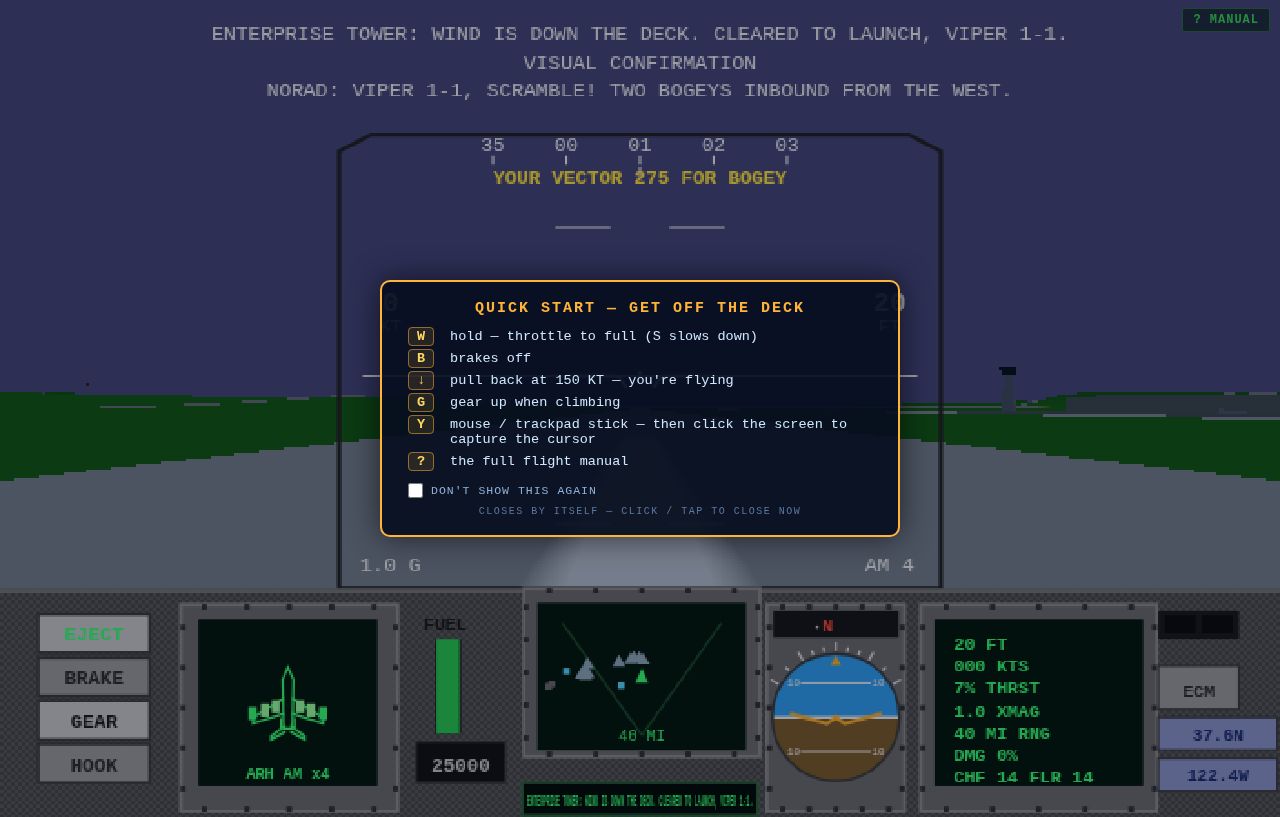
Radio messages used to arrive the way telegrams do — silent text at the top of the windscreen, easy to miss with a bandit on your nose. Not any more. Every call on the frequency now announces itself the way real traffic does: the squelch clicks open, a burst of band-passed garble rattles off with a voice’s cadence, and the squelch drops shut behind it. You hear the net before you read it.
And where the browser has a voice aboard, the call doesn’t stop at static — it speaks the line itself, flat and fast, the way a controller actually reads it: the tower clearing you to launch, NORAD vectoring you onto the bogeys, SCREWTOPS calling VAMPIRE VAMPIRE, the LSO talking you down the groove. Headset on, eyes out of the cockpit.
- One hook, whole net. The chatter rides the single message rail inside the sim — anything posted to the frequency (tower, AWACS, NORAD, instructors, range control, wingman check-fires) crackles on arrival, no matter which system keyed the mic.
- Synthesized, not sampled. The squelch-and-garble burst is built live in the WebAudio graph out of shaped noise — three to six syllables, randomized cadence — so no two calls sound quite alike and nothing had to be recorded.
- The voice has manners. Spoken lines come from the browser’s own speech engine, pitched down and paced up like a busy controller; callsigns read the way they’re said (“Viper 1-1” comes out “one one”), and a fresh priority call cuts the queue rather than backlogging the frequency. Where speech isn’t available, the chatter alone still carries the cue.
Between this and the recorded weapon callouts, the cockpit finally sounds the way a fighter’s headset feels: somebody is always on the net.