The F-16 Fighting Falcon — fast, nimble and no tailhook
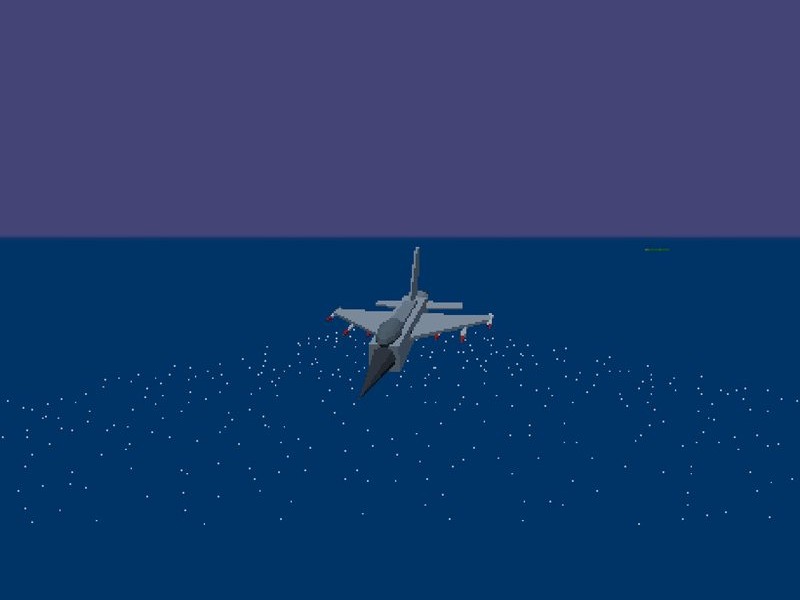
The F-16 Falcon rolls at 4.6 against the Hornet's 3.4, pulls 11 g and carries 18,000 lb of fuel. It has no tailhook, so the carrier is off limits.
Pick the Falcon on the plane-select screen and you are choosing a different kind of sortie. Everything about it is tuned for the land-based fight: lighter, quicker to roll, happier to pull, and thirstier than you would like for its size.
By the numbers (in the sim)
- Roll rate: 4.6, against the Hornet’s 3.4 — the quickest roll in the hangar (the Eagle is 4.4, the Tomcat 2.9 wings-spread).
- G limit: 11, one more than the Hornet’s 10.
- Stall: 90 m/s with a 76 m/s rotate, so it leaves the runway a touch earlier than the Hornet (95 and 80).
- Fuel: 18,000 lb, against the Hornet’s 25,000. Burn is 18.75 per second in military power and 43.75 on the burner. Watch the gauge.
No hook, no boat
The Falcon has no tailhook and no catapult bridle, so it cannot trap on the carrier or launch from it. Press 2 on a carrier start and the game tells you flatly that the F-16 cannot operate from the carrier. Land-based sorties are fair game, and the return-to-base rule still applies: you only complete a mission by getting back to the point you started from. We covered the sums in the fuel and carrier fix.
Flaperons and tape scales
The wing carries flaperons rather than separate ailerons and flaps, one of the working surfaces you can watch move. The HUD also gets tape-style speed and altitude scales on either side, where the Hornet shows stacked numbers. The model itself got a photo-reference pass, and you can print one from the print bay at 150 mm long.
For the record, the YF-16 first flew, unofficially, on 20 January 1974. This is an alternate-history tribute, not affiliated with the Navy, any manufacturer or the original game.
Try this: start free flight from a land airfield in the Falcon, light the burner for a high-g turn, then note how much fuel it cost you before you come home.
— HB