The AIM-120 AMRAAM — fire and forget, and why that changed everything
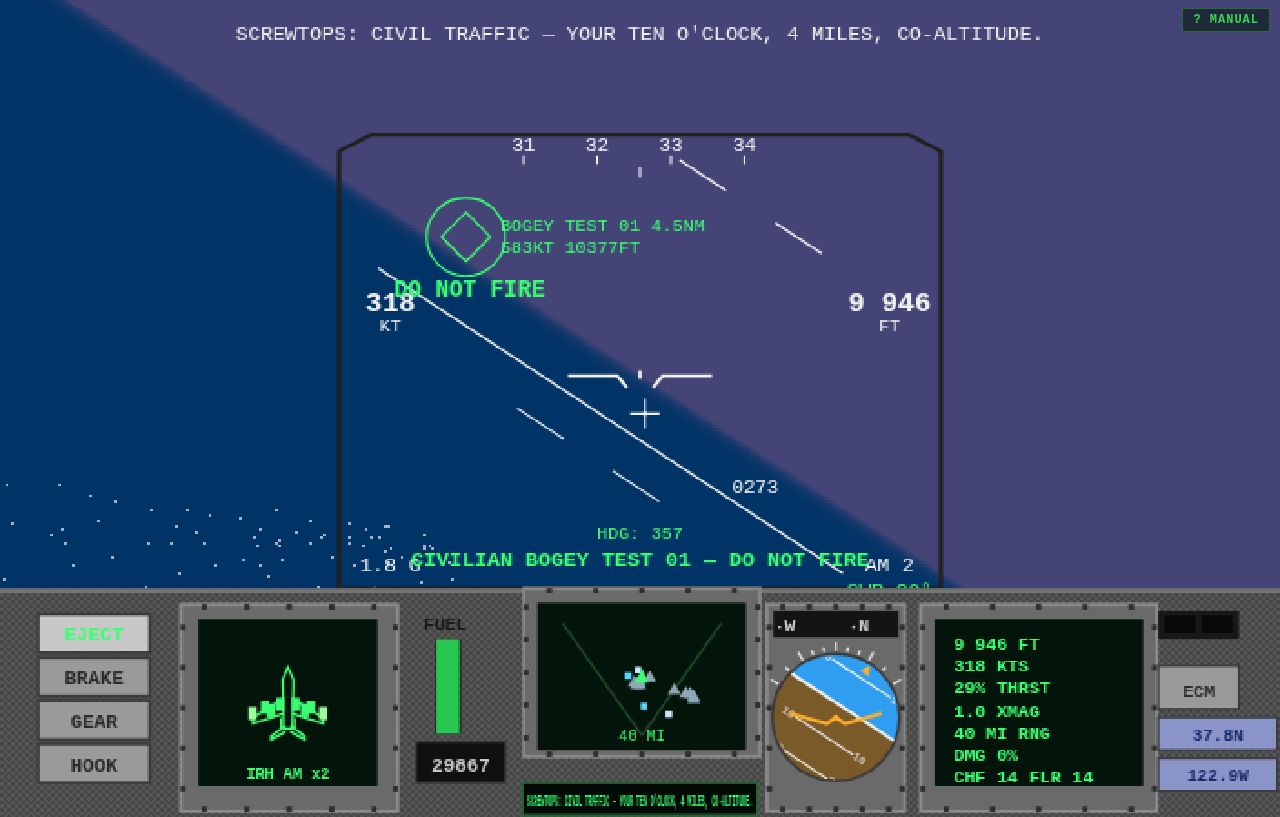
The AIM-120 AMRAAM is the default round on every non-Tomcat ring in Hornet Bay: 1,050 m/s, 40 seconds of flight, a lock out to 30 km, and unlike the Sparrow it needs nothing from you once it leaves the rail.
Put the AMRAAM next to the Sparrow and the whole story is one word: active. The Sparrow rides your radar beam and dies the moment you look away. The AIM-120 carries its own radar in the nose, so once it has a target it does the rest by itself. That is what “fire and forget” means, and it is why the call on the net is a flat “FOX 3!”.
In the sim, by the numbers
- Top speed 1,050 m/s, the same as the Sparrow, but with a 40-second flight life (Sparrow: 50, Phoenix: 90).
- Motor burn 3.0 s, then it coasts and drops a little in the last quarter of its life.
- Warhead damage 110, against 130 for the Sparrow and 160 for the Phoenix. It trades punch for convenience.
- Lock window: more than 900 m and less than 30,000 m, inside a 0.9 rad cone off the nose. The HUD range bracket lights inside 20 km.
- Load-out: four AMRAAMs, two Sidewinders and the gun. The stores page reads ARH AM x4.
- It is the starting weapon on every jet except the Tomcat, which opens on the Phoenix. ENTER cycles the ring, SPACE fires.
Why it matters
The Sparrow code keeps a timer: lose the lock for more than half a second and the missile goes ballistic. The AMRAAM has no such timer. Hold the lock until you fire, then turn away, defend, or go after the next bogey. It is still a radar round, so a well-timed chaff drop can spoof it, and a hard break at close range can shake it. Fast to shoot is not the same as certain to hit.
The real missile earned its reputation the same way. As far as I can verify, the first AMRAAM kill came in December 1992 over Iraq, when a USAF F-16 pilot downed a MiG-25. Hornet Bay is an alternate-history tribute, not affiliated with the Navy, any manufacturer or the original game, but the idea survives the trip: shoot, then think about something else. Meet the airframes that carry it on the F-16 page.
Try this: in the Hornet or the Falcon, lock a bogey at about 20 km, fire an AMRAAM, then break away hard and watch it keep tracking without you. Then do the same with a Sparrow in the Tomcat and compare. And remember that a mission only counts once you are back at your point of origin.
— HB